Worldwide, students are faced with the everyday task of surviving. For some students, mental health issues can affect how they go about their life; however, no one has to struggle alone. In the school there are teams of trained professionals to help with the problems students face.
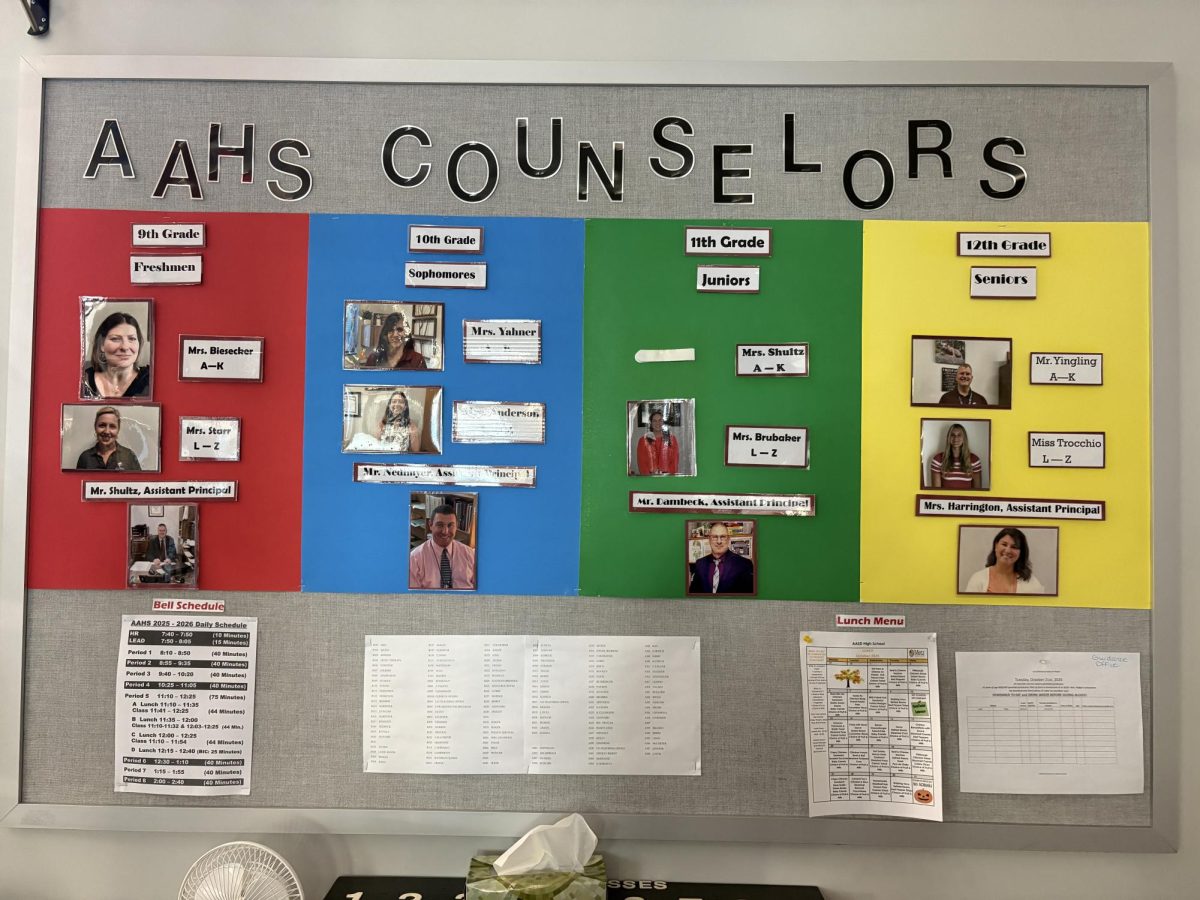
The school has a team of eight guidance counselors. The guidance counselors are assigned students based on their grade and last name. The guidance counselors are available for students who have issues with scheduling, peers or short term stressors.
“We have lots to offer here, whether it’s [help for] careers or any kind of assistance needed for students,” guidance counselor and department head Drew Yingling said. “We’re trying to provide linkages for students so once they graduate high school, they’re well equipped to pursue any kind of goal they want to, and [if needed] we can provide linkages to outside counseling services.”
Students can go to the counselors for anything, at anytime.
“A lot of times in the morning, you’ll have students who come in upset because they might have had a home issue,” guidance counselor Leah Trochhio said.“ [However] it can always be relationship issues, home issues, school issues or academic issues.”
The counselors are trained for school-centered counseling. They may not always be able to provide an answer, but they know what to do to provide help.
“We’re not going to pretend that we have all the answers to everything, but we’re here to help,” Yingling said. “We’re here to listen and to provide any kind of support that we possibly can.”
To see a counselor, students can go to the guidance office and request a pass at any time of the school day. Their counselor will get in contact and see them.
For some students, the guidance counselors are able to provide adequate resources, but for other students, they’ll talk to social workers.
“Social workers are a little bit more clinical [than school counselors],” social worker Roshanda Coffee said. “There is a lot of overlap. We try to be a little more proactive with our approaches.”
As a part of the approaches, the social workers have assigned students who they see on a regular basis.
“We work on skill building, social and emotional concerns, but a lot of it is skill building,” Coffee said. “A lot of it is, after four years, once the students leave here, we want them to be able to independently advocate and move on.”
Along with the social workers and guidance counselors is the Student Assistance Intervention Team (SAIT). This team is made up of guidance counselors, outside agencies and teachers.
Students can be referred to this team to receive extra help. The SAIT will review cases and see how to go about the student’s needs. Sometimes, guidance counselors and social workers will take cases, other times they will go to a counselor or therapist who comes into the school from an outside agency.
The purpose of the outside agencies is to provide students with a more structured counseling experience. The counselors who come in are trained in areas of mental health and/or alcohol and substance use disorders. They see students regularly for weeks, months or even through the changing of grades.
“Sometimes I see students who are struggling with mental health issues,” licensed professional counselor Katherine Stewart said. “Substance use disorder would be students that are experimenting with substances or using them pretty regularly, so we work on goals around that. Really, students can be seen for a variety of reasons.”
Having professional counselors in the school can make it easier for students to get the help they need.
“By having licensed professionals in the building, students don’t have to worry about getting to appointments after school,” Stewart said. “It breaks down barriers they might have to accessing services. We just want services to be available.”
While students have a variety of services available, things can go on outside of school. If a student is faced with a problem and is in need of immediate help, they can contact the Suicide and Crisis Lifeline by calling or texting 988. The Lifeline provides free emergency services in times of crisis. Students can also contact Safe2Say, an anonymous service that will contact the school. Students can report themselves or others to get extra help to start a counseling experience.