On Aug. 6, 1945, the United States dropped the world’s first functional nuclear bomb on the Japanese city of Hiroshima. They would drop another, this one on Nagasaki, on Aug. 9. The dropping of the first atomic weapon at the end of the second World War stands as one of the most debated events in history. It asks a vital question that remains prevalent today: Should we just because we can?
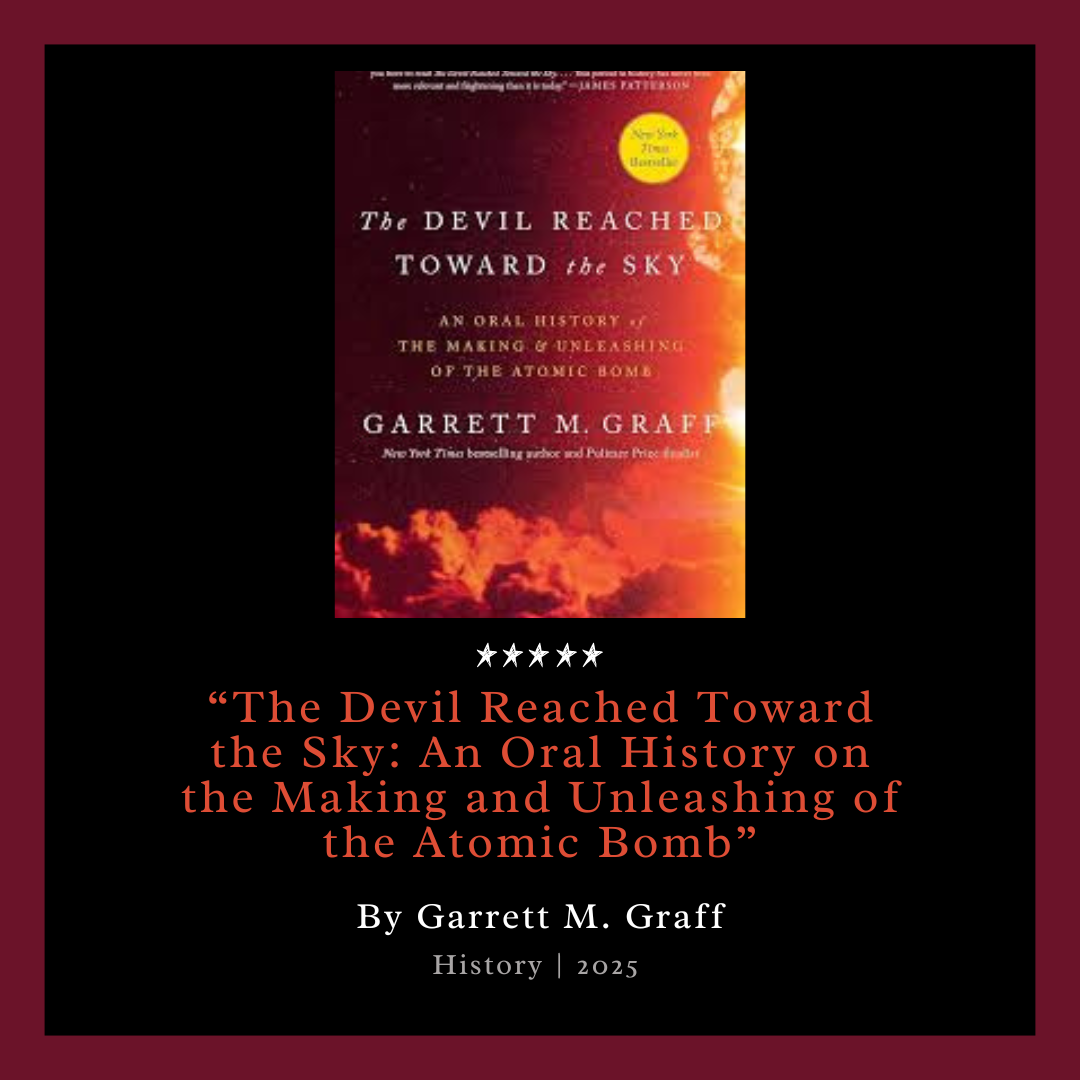
Garrett M. Graff’s “The Devil Reached Toward the Sky: An Oral History on the Making and Unleashing of the Atomic Bomb” was first published on July 24, 2025, though purposefully didn’t hit shelves until early August. The novel’s release coincided with the 80th anniversary of the devastating event, emphasizing its impact on not just human history, but human society.
Although Graff’s book is centered around the “Little Boy” nuclear bomb, it starts much, much earlier than the first whispers of the Manhattan Project. Instead, it begins with Democritus sometime between 460-370 B.C., and his coining of the term “atomos,” which he believed to be little pieces that made up everything on the earth. This may seem like a superfluous way to start a book on the Hiroshima bombing, but it’s actually a strategy that Graff used to unveil the domino effect that led to the events of World War II. After all, for there to be an atomic bomb, there has to be atoms (or “atomos” as Democritus called them).
In the novel, the first bomb doesn’t hit Japan until well over the halfway mark. Not only is this an expertly wielded method of building suspense, but it also gives the audience the opportunity to immerse themselves in the bizarre and dreadful landscape that was the United States during World War II. Letters and journal entries from highly regarded scientists illustrate the beginnings of the war: The slow boil-up of antisemitism in Germany fueled by the rise of Adolf Hitler, a fear-rampaged central Europe, an even more restless Japan, and all of the tension bleeding into a country claiming neutrality, the United States.
The first-person accounts of the events make them all the more impactful, with each scientist, officer, pilot or regular citizen adding a new and personal perspective on each occurrence. This becomes especially true in the latter half of the book, as each page draws the reader closer and closer to Aug. 6, and the views of each person quoted become increasingly anxious and foreboding. There’s a certain amount of dramatic irony in every word written before the “Little Boy” destroys Hiroshima. The dozens of scientists working on it wonder constantly if they’ll be able to finish such a device before the war is over, or even years afterward. J. Robert Oppenheimer, the famous leader of the project, frets over its success under the eyes of his higher-ups, including President Roosevelt. Even the pilots who dropped it didn’t think it had worked at first.
This naivety is quickly dispelled as they each log a searing white light filling the aircraft, followed by a purple-ish mushroom cloud that reaches higher than the plane. As the crew continues to look back at what was Hiroshima in awe and horror, Graff transitions to accounts from the Japanese citizens at ground zero. Schoolchildren and working adults alike describe watching their city and homes obliterated instantaneously. They tell how they watched their friends and neighbors stumble on the burning streets, their skin slipping from their bodies, no idea what had happened or what to do next. This section of the novel highlights the disturbing consequences of nuclear warfare in a way that no history book or description could. The words of those affected by the bomb make it feel so recent and prodigious that it’s almost hard to believe that it’s been over 80 years since it happened. Each person’s story makes it evident that no amount of time can erase the impact that August of 1945 had on the world, and no amount of time should do so.
This is the strength in Graff’s writing, and why it gets five stars. While he did not say any of the words quoted in his book, he tied them all together in an intricate, poignant sequence that manages to express each event in its rawest form. He masterfully traverses every scene of emotional turmoil, every scientific breakthrough and every line of chilling irony in a way that is careful to keep their realism, but that refuses to shy away from the even more real effects.
This distinct tone is what makes the novel worth reading by anyone and everyone. Of course, his book does not replace being alive during that time, but it still offers insight into the past failures and ingenuity and gives the audience the necessary information to construct their own response to that fateful question: Should we just because we can?