
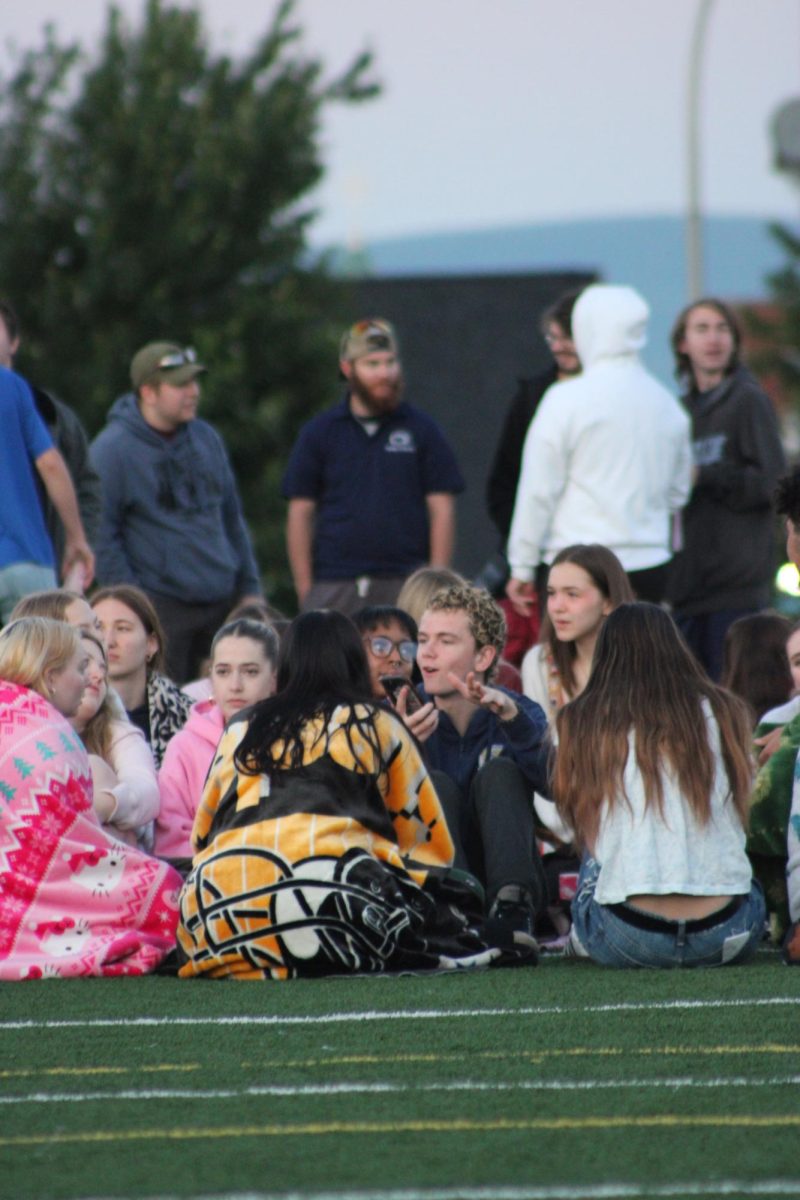
![Celebrating community. A group of Muslim students attended a New Year's celebration. "[It was a] celebration to end off the year on a good note and start the new one just as good," sophomore Abdrahman Elsadeg said. (Courtesy of Abdrahman Elsadeg)](https://aahsmountainecho.com/wp-content/uploads/2026/02/Snapchat-1987977030.jpg)
A test of faith and discipline, the month of Ramadan is practiced by Muslims all over the world. Following the Muslim calendar, Ramadan falls from Feb. 17 to March 19 this year.
“Ramadan means a period of time where you devote yourself to God, and you test your patience, your discipline and your urges as well,” sophomore Abdrahman Elsadeg said. “I feel like it really helps some people when it comes to disciplining themselves. Becoming closer to God as well. You try and rid yourself of your evil, anything bad you’ve done, and you take the whole month to try and become closer with God.”
During the month of Ramadan, Muslims are not permitted to eat or drink during daylight hours.
“Whenever I tell people about it they think it’s horrible, but in reality it’s not hard,” sophomore Mohamed Babikier said. “I don’t even think about it in a way that’s negative. I wake up before sunrise—I usually eat a meal then. It’s not that hard, especially this year with daylight savings. It’s 5 a.m. to 5 p.m, which is not hard at all.”
Fasting provides unique challenges, particularly for athletes. Elsadeg competes in wrestling during the month of Ramadan which has required him to focus on his nutrition.
“I honestly treat my practice like any normal practice,” Elsadeg said. “I still attempt to drill hard, practice well, except obviously I’m deprived of water and nutrients… I feel like it has been harder, but I’ve been able to get through it, and it wasn’t as hard as I thought it was going to be originally… When I break my fast, I make sure to focus on getting a decent ratio of macros, focusing on getting high amounts of fat to keep me satiated for the next day, high amounts of protein to rebuild muscles from wrestling, and also to prevent muscle loss from fasting. And then carbs as well as my main energy source, and I also make sure to get a lot of antioxidants as well.”
For Muslims, Ramadan is a time of reflection and faith.
“It’s a big spiritual thing for me,” Eltayeb said. “It’s a time where I reflect to God about my actions. It’s time where I get together with my family. It means a lot in a spiritual way.”
During Ramadan, many Muslims focus on supporting others and giving back to those in need.
“We donate to charities,” Eltayeb said. “We can feed them. For example, we can hand out meals to people who are less [fortunate]. And they don’t have to be Muslim, they can be any religion or ethnicity. It’s the month of feeding and giving.”
Community is an integral part of Ramadan, and it serves to strengthen bonds and relationships.
“As a community together, we strive to become a whole, break down any differences we have, and we unify ourselves under the belief of God,” Elsadeg said. “We try and become better, more religious people.”


Abe Elsadeg • Feb 26, 2026 at 2:22 pm
Top tier article from Gil