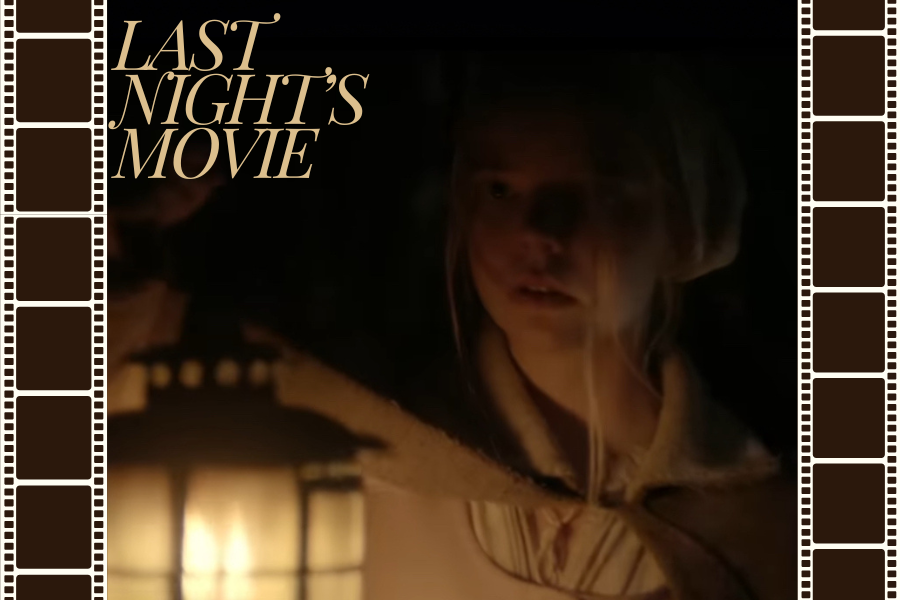
A single film can change a director’s entire artistic trajectory and their status in the industry. This becomes especially true when that film is the director’s debut. One of the best examples of this is “The Witch” (2015), the debut film that shot director Robert Eggers into notoriety and set in motion a string of movies equally as eerie and folklore-heavy.
“The Witch,” stylized as “The VVitch,” opens as a family gets exiled from their Puritan community in colonial America. Unfortunately for them, their excommunication becomes the least of their concerns upon their relocation to a farm bordering a vast forest. Tragedy after tragedy befalls the family, sending them into a spiral of paranoia centered around one, single thing: the witch.
While Eggers had released short films long before “The Witch” came into existence, the folksy horror piece was his first full-length movie. This transition into longer works isn’t lost in “The Witch;” it’s glaringly evident. Although its runtime was only an hour and 32 minutes, the plot structure and pacing made it obvious that it could have easily been a short film like Eggers’ other projects. In this way, the critiques on the overuse of certain scenes and the dragging pace they engender are understandable. Still, that doesn’t mean we necessarily agree with them.
The slower pace is noticeable, there is no denying that, but it doesn’t make the movie any less effective. After all, the narrative is set in colonial New England; the day-to-day life of early settlers wasn’t exactly exciting. Eggers uses this pacing to encourage the audience to slow down and take notice of the details; a process which aids the story in reaching its full potential both visually and narratively.
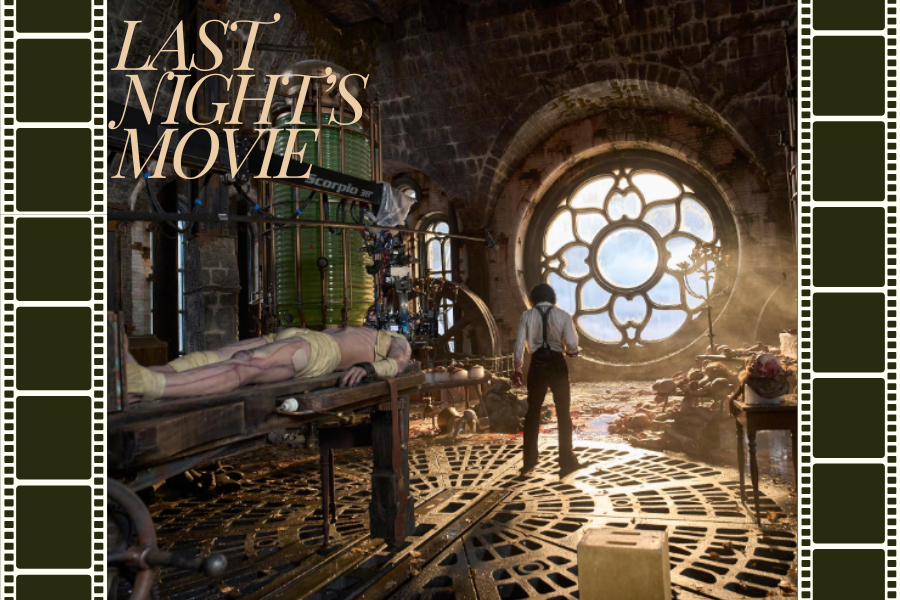
The scenes themselves reek of visual appeal, something of which Eggers consistently checks all of the boxes. The film’s tone is very melancholic throughout, reflected in the plethora of dark-shot scenes and dreary atmosphere. Eggers’ mastery of reflecting a dark mood can be seen throughout his other works as well, especially in his “Nosferatu” (2024) and “The Lighthouse” (2019). As Eggers’ first film, it was evident that it was not given the same budget as his later films, but one area where he did not cut corners was in the film’s lighting and cinematography.
This film was expertly cast starring the illustrious Anya Taylor-Joy as eldest daughter, Thomasin, alongside actors Harvey Scrimshaw as the oldest brother, Caleb, Ralph Ineson as the father, William and Kate Dickie as the mother, Katherie. One of our main criticisms throughout the film was the ambiguity of the setting. Though the film’s opening scene establishes the setting as colonial America, the accents portrayed by the actors are best described as “ambiguous European,” in that they are all distinctly some iteration of a UK-adjacent accent but each character’s is different. While Thomasin’s accent is clearly an English one, William’s is heavily Scottish. For people portraying a family, one would be led to assume they would have the same accent, but they don’t; thus removing us from the movie at many instances throughout its duration.
Another common critique of the movie is its climax, or lack thereof. While we don’t want to give anything major away, we can confirm that Eggers steadily builds the suspense (and does a great job of it, by the way) that ultimately leads to nothing—or, at least, what feels like nothing when reflecting on the rest of the movie. However, we’re not exactly mad about this, because Eggers made it abundantly clear that “The Witch” was heavily founded on traditional New England folklore, folklore that was not known for incredible plot twists and shock-endings. In short, the plotline may be predictable, but since it’s trying to mirror colonial-era stories, that actually just makes the movie more successful.
One of the most prominent strengths of the movie is its historical accuracy, even down to its title. The dialogue is, at times, difficult to understand, in part due to volume but also because it’s largely written in ‘ye olde.’ While much of the language may be lost on a 21st century audience, it thoroughly builds the colonial time period, and was actually sourced from old folktakes of the era.
Another positive trait shared by Eggers’ films is their flawless costuming. The costumes in “The Witch” are nothing short of astounding. They are period-accurate, and they fit perfectly with the melancholic tone of the film. Upon further research, we also found that the stylistic title, “The VVitch,” is a reference to the lack of a “W” in many early printing mechanisms. In all, it’s evident that Eggers put care into his story and thoroughly researched it so as to not leave any major holes in the plot for audiences.
With all of this in mind, we give Robert Eggers’ “The Witch” four out of five stars. It’s a poignant, atmospheric look into the mania and religion-riddled world of the Puritan colonies, perfect for an otherwise uneventful night in. On top of that, it offers a deep and translucent look into Eggers’ artistic process along with all of the other work that goes into making a movie.