
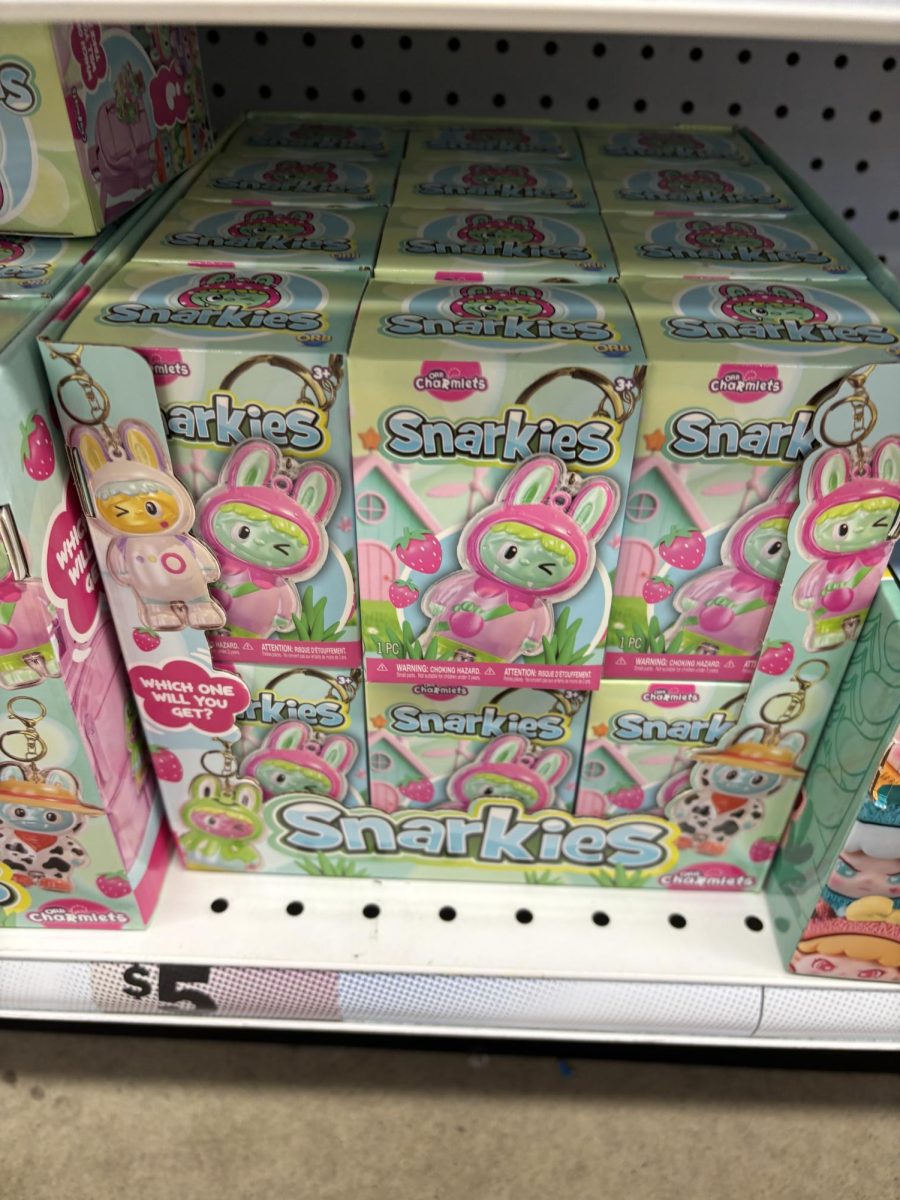
Labubus are collectible dolls targeted at social media users, and they have many appealing aspects that led to their virality. Characterized by their sharp teeth and mischievous look, Labubus are bag charms or dolls that come in blind boxes. Part of the thrill of blind boxes comes from gambling, and that just adds to the appeal of Labubus that was already amplified by the supply and demand issues caused by the popularity of the dolls. Opening blind boxes is addicting, especially when the buyer has a desired outcome for the toy they get.
Pop Mart, Labubu’s parent company, capitalized on the idea of blind boxes. Blind boxes are toys, but the consumer doesn’t know which toy was bought until the box is opened. Many blind box companies have “chasers,” which are rarer varieties of the regular toy found in the box. Blind boxes have been known to go viral on social media sites such as TikTok and Instagram.
“I bought a Miffy [blind] box, and I have wrapped it up, and I’m saving it for when I have a really bad day, because they make me really happy,” senior Grace Long said.
Social media influencers and celebrities are part of the spark in popularity. K-pop star Lisa from Blackpink helped bring attention to Labubus at the beginning of the trend, and since then celebrities like Kim Kardashian, Rhianna and Paris Hilton have been representing the trend.
“Back before they became a thing, I followed this one fashion designer who had entered into fashion design,” Long said. “She loves Tokyo, and she went there, went to Pop Mart, would buy Labubus and she would open them. I wanted one, but I never acted upon it. Then it became a thing, and I was like, ‘Do I really want one?’ Then I decided I did want one.”
The target market for Labubus is 18-35 year olds, which is also the age of the majority of social media users. They’re seen as somewhat of a status symbol due to their scarcity; this gives people a sense of pride when they can get one. Not everyone feels this way, however.
“I think that they’re scary,” senior Addison Barr said. “It’s kind of childish that adults carry around stuffed animal keychains; it’s kind of disgusting.”
During the beginning of the Labubu trend, they were very difficult to find because of the sudden increase in demand. It’s a classic case of ‘people want what everyone else has.’ Now that they’ve become so popular that Labubu and Pop Mart product distributors have caught up with the mass consumption of their products, the trend is reaching its end.
The demand was so significant that it sparked knock off production, or the selling of products that are lower-quality, inauthentic versions of the real thing. Scalpers contributed to the issues, buying the products in bulk and reselling them online for significantly higher prices. The trend started in April and peaked in June, but the resale market has been dropping since then. Currently, Pop Mart is producing 30 million Labubus a month, which could negatively affect our environment due to factory emissions and overconsumption of unnecessary goods. People who can’t afford real Labubus buy what are known as “Lafufus,” contributing to overproduction and overconsumption of the mass produced toys.
“No [my Labubu isn’t real],” junior Katelynn Wood said. “If I had the money [I would get a real one], it was very viral on Tiktok, so I kind of just got one from the flea market.”






Katelynn • Jan 23, 2026 at 10:16 am
I have a real one now❤️